The life of a test · 03 Analyse
Every analysis says how it was made.
From a Sanger edit to a PCR quantity or parentage decision, every analysis runs from exact versions and every result retains its method, inputs and settings.
Sanger analysis
A number only when it can be used.
Edit analysis, minor variants and NGS confirmation each say whether a result is usable before showing it.
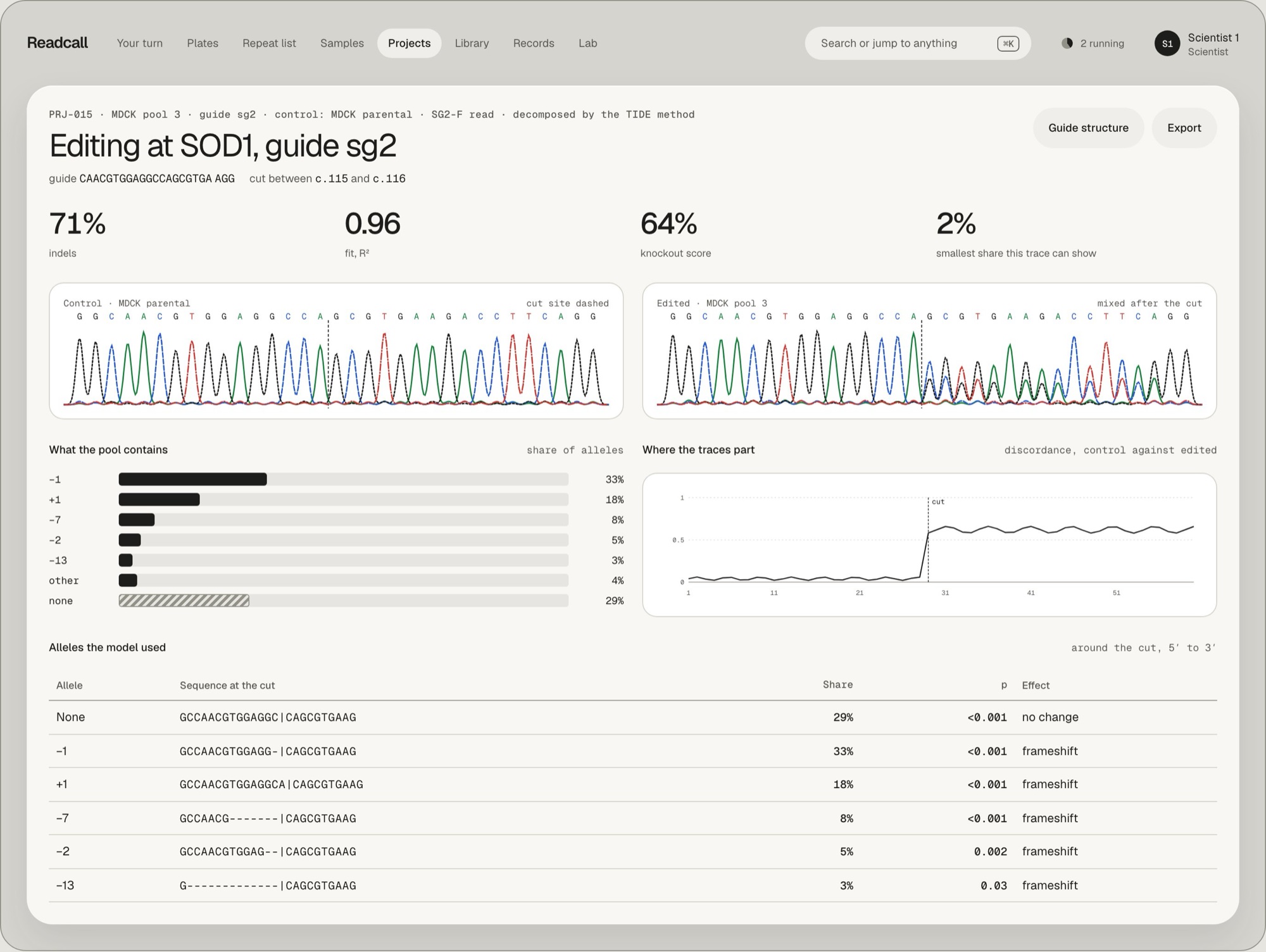
- CRISPR edits measured with the fit stated
- Minor variants with a limit of detection
- NGS variants confirmed by their Sanger read
PCR analysis
Controls first, then the result.
Real-time PCR covers detection, copy number, gene expression, GMO content and allelic discrimination. Digital PCR reports concentration with uncertainty and qualification state.
- Raw curves and flags retained with the analysis
- Quantities retain efficiency, uncertainty and calibration evidence
- Automatic calling remains gated by laboratory validation and concordance
Arrays and parentage
Every genotype and exclusion stays inspectable.
Array genotypes feed identity and parentage workflows with blind review, explicit conflicts and locked releases.
- SNP arrays and supported genotype tables
- Verification and discovery kept distinct
- Certificates released only after the required review
In development · NGS
NGS calling is not available in the current demo.
Run intake, mapping, calling and panel review are still being developed and validated as Phase 3.
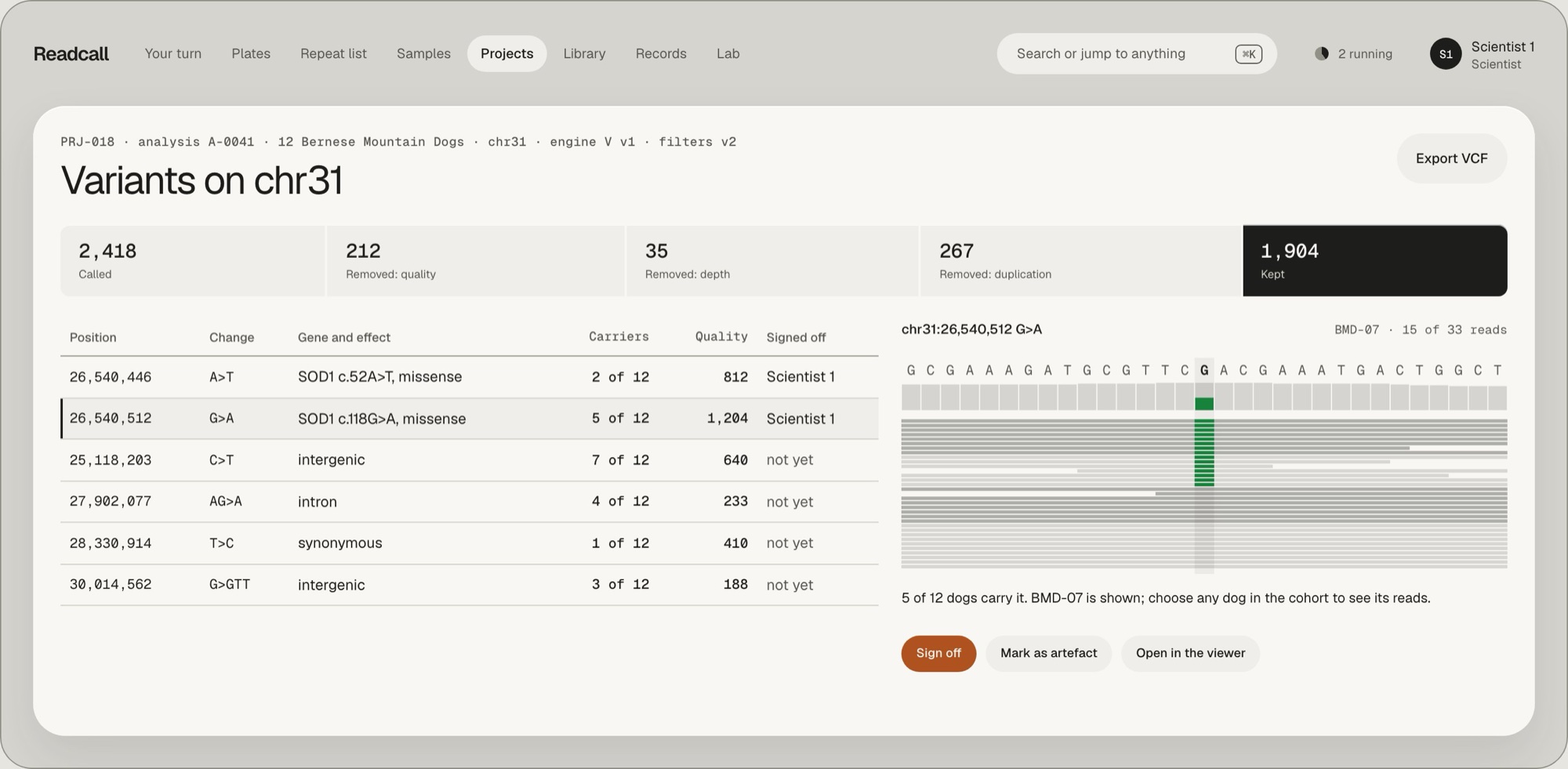
- The shared demo does not run the NGS compute worker
- Design screens do not represent a released workflow
- Availability follows published validation evidence